
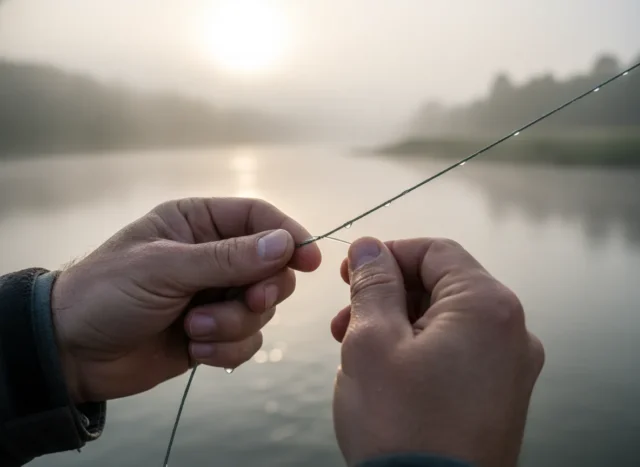
So you’ve spooled up your reel with modern, super-strong braided line. You can feel every pebble on the bottom, and your casting distance is incredible. But there’s a problem: you’re in clear water, and you’re just not getting bites. Can I just tie my braid directly to the lure? You can, but you’re likely spooking fish. This is a common frustration, but thankfully, there’s a simple, professional-grade solution that will dramatically increase your catch rate: the leader line. This guide will walk you through the pro’s secret for getting the best of both worlds. We’ll show you exactly why you need a leader and provide a step-by-step guide on how to set one up. Once you master this simple fishing leader line setup, you’ll wonder how you ever fished without it. For the best leader material, you can shop our fluorocarbon leader lines.
Why You Absolutely Need a Leader with Braided Line
Using a braided fishing line leader isn’t just an optional tweak; it’s a fundamental technique that solves braid’s two biggest weaknesses.
Benefit 1: Invisibility for Stealthy Presentations
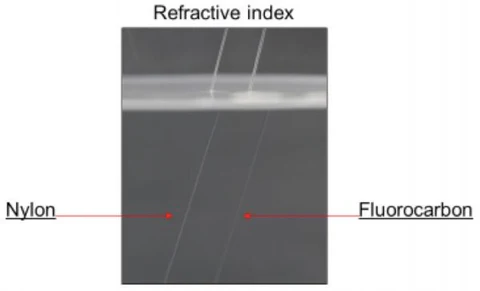
Braided line is incredibly strong, but it’s also opaque and highly visible underwater. In clear water, wary fish like bass or trout can see this thick line connected to your lure and will often refuse to bite. A leader made from fluorocarbon, which is nearly invisible underwater, creates a stealthy buffer between your visible main line and your bait. The fish only sees the lure, dramatically increasing your chances of a strike.
Benefit 2: Abrasion Resistance to Prevent Break-Offs
While braid is strong in straight-pull strength, it has poor abrasion resistance. If it rubs against a sharp rock, a dock piling, or a fish’s toothy mouth, it can snap surprisingly easily. Fluorocarbon is extremely tough and abrasion-resistant. The leader acts as a shock absorber and a protective barrier, preventing costly break-offs and lost fish.
The Step-by-Step Guide: How to Tie a Leader to Fishing Line
This is the part that intimidates many anglers, but it doesn’t have to. While there are many complex knots out there, we’ll teach you the one that offers the best combination of strength and ease of tying.
The Double Uni Knot: The Best, Easiest Knot for Beginners
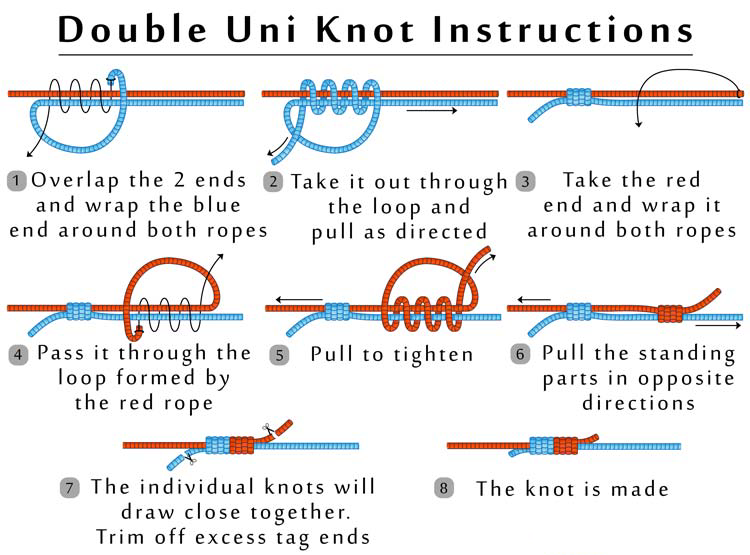
The Double Uni knot is a time-tested connection that is strong, reliable, and relatively easy to master. Here’s how to tie a leader to fishing line using this fantastic knot.
- Step 1: Overlap Your Lines Overlap about 6-8 inches of your main braided line and your fluorocarbon leader line, running them parallel to each other.
- Step 2: Tie the Braid Uni Take the tag end of your braided line and form a loop over the top of both lines. Wrap the tag end through the loop and around both lines 5-6 times.
- Step 3: Tie the Leader Uni Now, take the tag end of your fluorocarbon leader. Form a loop in the opposite direction and wrap this tag end through its loop and around both lines 3-4 times. (Fewer wraps are needed for the thicker leader material).
- Step 4: Moisten and Pull Tight Moisten the knots with water or saliva. Gently pull on both tag ends to snug the wraps down. Finally, pull on both standing lines (your main line and leader) to slide the two knots together until they jam tightly. Trim the tag ends close to the knot.
The FG Knot: The Ultimate Pro-Level Connection (Advanced)
As you become more experienced, you may want to learn the FG Knot. It is much slimmer and even stronger than the Double Uni, but it is significantly more complex to tie correctly. Master the Double Uni first; it will serve you well in 99% of situations.
How Long Should Your Braided Fishing Line Leader Be?
This is a great question with a simple starting point.
The General Rule
A good general rule is to start with a leader that is about the length of your fishing rod. For a 7-foot rod, a 7-foot leader is a great all-purpose length. This is long enough to keep the connection knot outside of your rod tip when casting.
Adjusting for Conditions
You can adjust the length based on water clarity. In murkier water, you can get away with a shorter leader (2-3 feet). In crystal clear water where fish are extra spooky, a longer leader of 10-15 feet can make a huge difference.
Choosing Your Leader Material: Fluorocarbon vs. Monofilament
You have two main choices for leader material, but one is the clear winner for most scenarios.
Why Fluorocarbon is the Top Choice for Most Situations
Fluorocarbon is the best choice for a leader 9 times out of 10. Its near-invisibility and superior abrasion resistance are exactly what you need to complement your braided line. It provides the perfect stealthy and durable connection to your lure.
Monofilament (Alternative)
Monofilament can also be used as a leader. Because it floats (unlike fluorocarbon which sinks), it is a good choice when fishing topwater lures to help keep your bait on the surface.
Master the Knot, Master the Catch
Learning to properly set up a leader line is a true “level up” moment in any angler’s journey. It’s a skill that separates the beginners from the seasoned pros. By taking a few minutes to master this simple connection, you are combining the best properties of two different lines into one superior system. You get the strength and sensitivity of braid, with the invisibility and toughness of fluorocarbon.
Now that you know how, it’s time to get the best leader material for the job. Shop our tough and invisible fluorocarbon leader lines and see how many more bites you get.
FAQ: Your Top Leader Line Questions Answered
Will the knot connecting my leader affect my casting? If you tie a bulky knot or don’t trim the tag ends close, it can catch on your rod guides and reduce casting distance. This is why learning a streamlined knot like the Double Uni or the even slimmer FG knot is important. A well-tied knot will slide through the guides with minimal friction.
How do I know when to replace my leader line? Your leader is the part of your line that takes the most abuse. Run your fingers along it frequently. If you feel any nicks, scuffs, or rough spots, cut it off and tie on a new one immediately. A frayed leader is a lost fish waiting to happen. It’s a cheap and easy piece of insurance.
Is it better to use a swivel to connect my leader? For most lure fishing applications, it is much better to connect your leader directly to your main line using a knot. A swivel adds extra hardware that is more visible to fish and creates a potential weak point. Swivels are best used for techniques where line twist is a major issue, like trolling or fishing with inline spinners. Get the right material for the job by browsing our shop.