

Largemouth Bass—they are aggressive, powerful, and pound-for-pound, the most popular game fish in North America. Landing a big one is the ultimate thrill. But if you’re new to bass fishing, it can feel like a game of hide-and-seek. What is the best time of day to fish for bass? Knowing the answer is only half the battle. This complete guide simplifies bass fishing into two essential, actionable skills: knowing where to look and knowing what to throw. Master this simple formula, and you’ll go from beginner to bona fide bass angler in no time. To get started with the right gear, explore our full collection of bass lures.
Understanding Your Target: What Do Bass Eat?
The key to catching bass is thinking like a bass. Largemouth bass are ambush predators. They don’t casually cruise for a meal; they hide and wait for something to swim past.
The Bass Buffet: Baitfish, Crawfish, and Frogs
The vast majority of a bass’s diet can be simplified to three main things: baitfish (like minnows and shad), crawfish (crayfish), and frogs. Your entire strategy in choosing largemouth bass bait lures should be based on perfectly imitating one of these three meals.
Where to Find Bass in a Lake or Pond: The Power of “Cover”
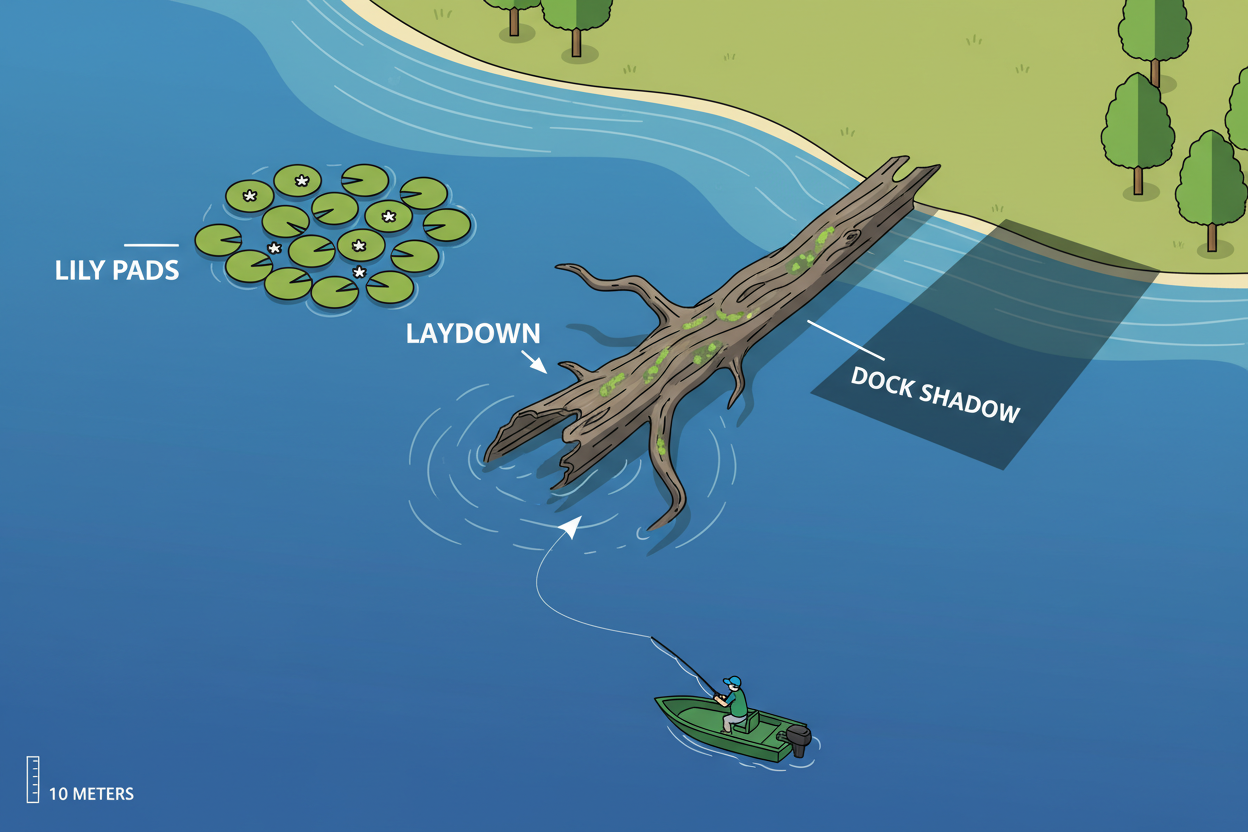
Bass are lazy predators. They will always position themselves next to “cover”—any object that provides them with shade, a place to hide, or a structure to ambush prey. Forget fishing in open water; fish the cover.
Weeds and Lily Pads
Bass love thick vegetation. Weeds provide shade, oxygen, and a home for small baitfish. Look for the edges of weed lines or open pockets within a lily pad field.
Fallen Trees and Wood (Laydowns)
A fallen tree that extends into the water is one of the best spots to find a large bass. The wood offers the perfect ambush point where bass can sit in the dark shade and dart out to attack passing prey.
Docks and Man-Made Structures
Any man-made structure provides immediate shade. Bass will position themselves under boat docks, submerged tires, or next to bridge pilings. Always cast parallel to the structure to keep your lure in the strike zone longer.
The 3 Best Largemouth Bass Bait Lures for Beginners
If you’re looking for an essential lures kit that works, forget the complex tackle boxes. Master these three simple lures, and you will consistently catch bass.
Lure #1: The Spinnerbait (The Search Tool)
What it is: A lure with a skirted body and one or two spinning metal blades.
How to Use It: Cast it out and reel it back in at a steady pace. It’s perfect for covering a lot of water quickly and helping you find active fish. Its unique design makes it virtually weedless.
Lure #2: The Texas-Rigged Soft Plastic Worm (The Cover Specialist)
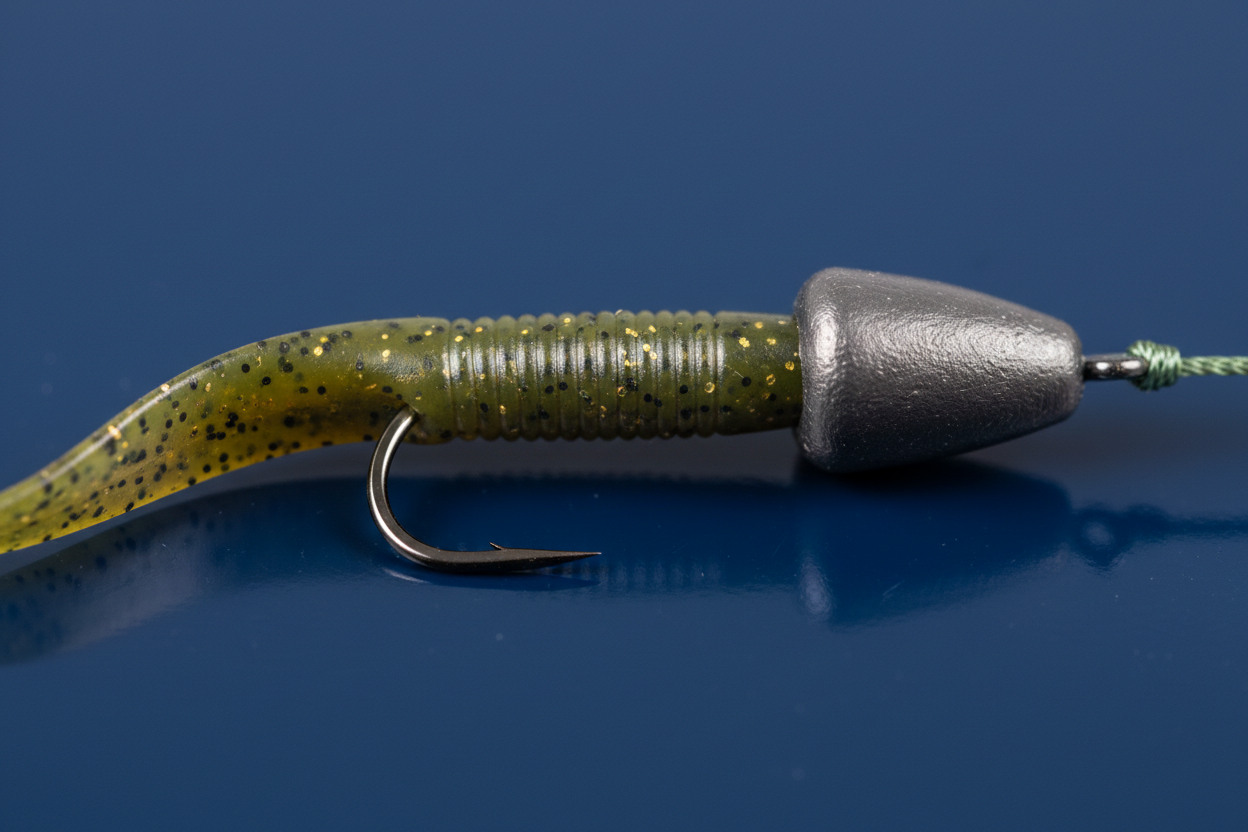
What it is: A simple soft plastic worm rigged on a bullet weight and hook.
How to Use It: The hook point is actually tucked into the plastic body, making it completely “weedless.” This allows you to cast it right into the heavy cover (weeds and wood) where bass live. Cast it in, let it sink, and gently hop it along the bottom.
Lure #3: The Topwater Popper (The Excitement Factor)
What it is: A hard lure with a concave, cupped face.
How to Use It: Cast it near cover and retrieve it with a “twitch-twitch-pause” cadence. This makes the lure spit water, mimicking a frog or injured baitfish struggling on the surface. Topwater is incredibly exciting, and a strike can be explosive.
Gear Recommendations: The Perfect Beginner Bass Setup
While the lure matters most, a balanced setup makes all the difference.
Your Rod & Reel Combo: Medium Power, Fast Action
The ideal rod is a 6’6″ to 7′ medium power rod with a fast action tip. This gives you the backbone to pull bass out of cover and the sensitivity to feel bites. Pair it with a 2500 or 3000 size spinning reel.
Your Line: 10-12lb Line
Use 10-12lb monofilament or fluorocarbon, or a 20-30lb braided line paired with a leader for fishing around abrasive cover.
From Beginner to Bass Angler
Catching largemouth bass is all about strategy, not luck. The formula is simple: Find the Cover (weeds, wood, docks), Use the Right Lure (match the meal, use the right technique), and Set the Hook Firmly! You have the knowledge to successfully target the world’s most fun-to-catch fish.
You have the knowledge. Now get the gear that’s proven to catch bass. Shop our dedicated Lure section and land your personal best.
FAQ: Your Top Bass Fishing Questions Answered
What color lure is best for bass?
Keep it simple with two basic color patterns:
Natural: Green Pumpkin, Black/Blue, or Watermelon Red. Use these in clear water.
Bright/Flashy: Chartreuse or White. Use these in murky water to create better visibility.
What is the best time of day to fish for bass?
Early morning (dawn until about 10 am) and late evening (4 pm until dusk) are the best times. During these periods, bass move out of deep cover to feed aggressively in shallower water. The midday sun forces them into thick cover or deep shade, making them much harder to catch.
How do I set the hook when bass fishing?
When you feel a bite, don’t just gently lift the rod. Drop your rod tip slightly, reel down the slack, and then perform a very aggressive, sweeping motion over your shoulder, pulling the rod straight up. This strong hookset is necessary to bury the hook past the bass’s tough mouth and get the fish out of the cover. Use a great combo like the recommended combo for the best performance.