
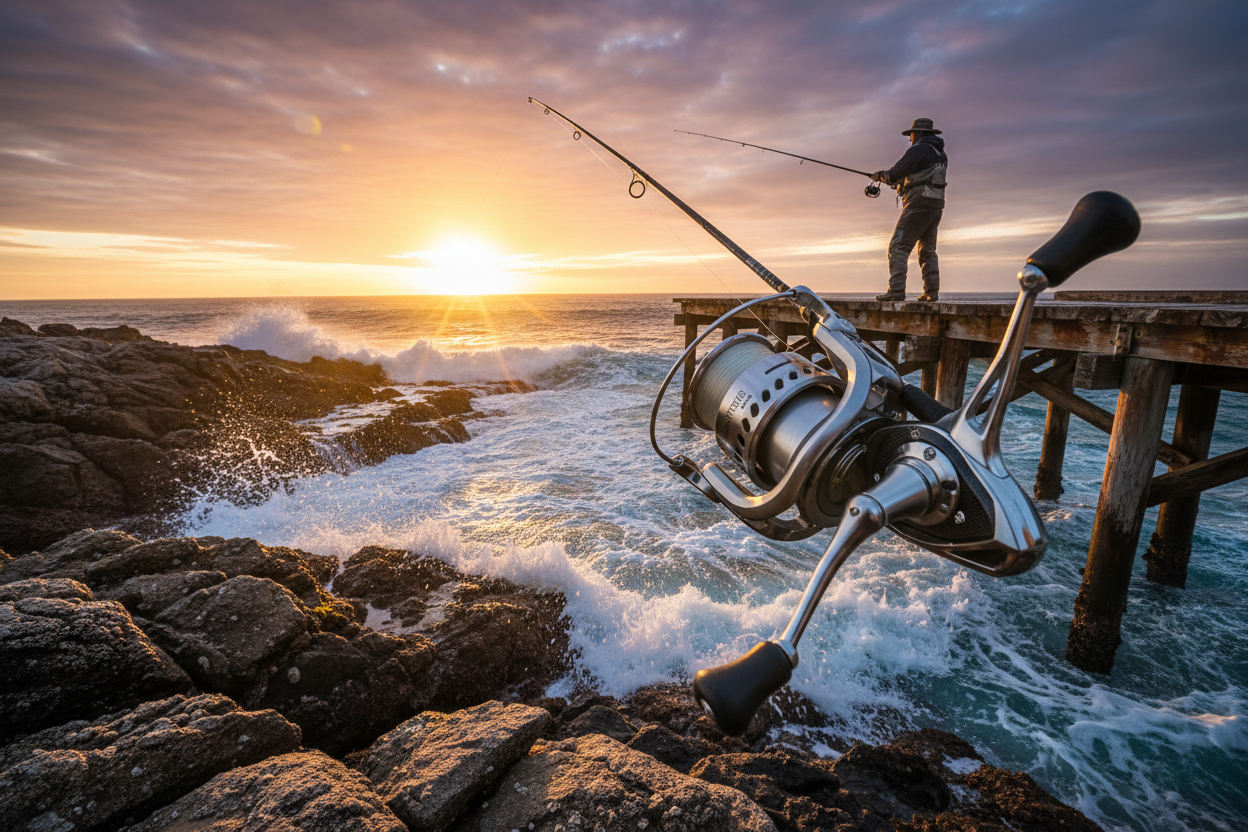
Can I use my freshwater reel in saltwater? This is the first question most novices ask. While the short answer is “technically yes,” the reality is that the ocean will destroy standard gear in a matter of weeks.
This guide is designed for saltwater fishing for beginners, helping you understand the unique demands of the sea, from battling salt corrosion to choosing the right power-packed gear. To start your journey with confidence, .
Saltwater vs. Freshwater: What’s the Real Difference?
Saltwater fishing isn’t just freshwater fishing with more salt; it’s a completely different environment that demands respect.
The Salt Factor: Why Corrosion is Your Biggest Enemy
Saltwater is incredibly corrosive. When salt water dries, it leaves behind microscopic crystals that act like sandpaper inside your gear. If your reel isn’t designed with sealed systems, these crystals will grind down your bearings and gears, leading to total equipment failure.
The Power Factor: Stronger Fish and Tougher Conditions
Ocean fish are generally faster, stronger, and more aggressive than their freshwater cousins. A 5-pound saltwater fish will often fight twice as hard as a 5-pound bass. You need gear that can handle long, high-speed runs and powerful headshakes without breaking.
Choosing the Right Saltwater Fishing Reels
Your reel is the heart of your saltwater setup. In the ocean, you need a combination of capacity and durability. This is where become essential.
Size Matters: Why You Need 4000 to 6000 Series Reels
In freshwater, a 2500-size reel is usually plenty. In saltwater, you need a 4000, 5000, or even 6000 series reel. These larger sizes provide more line capacity—crucial when a big fish decides to run for the horizon—and larger drag washers to dissipate the heat generated during a long fight.
Sealed Bearings and Metal Bodies: The Key to Durability
When browsing for , look for “Sealed” or “Shielded” bearings. A full metal body provides the rigidity needed to keep gears aligned under the massive pressure of an ocean predator.
Essential Saltwater Rods and Lines
The ocean puts immense stress on your rod and line. You cannot afford a weak link in your chain.
Medium-Heavy Rods: For pier and shore fishing, a 7′ to 9′ Medium-Heavy carbon fiber rod offers the perfect balance of casting distance and pulling power.
Braided Line: We highly recommend using . Braid allows you to pack much more line onto your spool than monofilament. This gives you the “insurance” you need if a trophy fish takes a long run.
The Best Saltwater Lures for Shore and Pier Fishing
You don’t always need live bait to be successful in the salt. Some of the are simple, durable, and incredibly effective:
Silver Spoons & Metal Jigs: These mimic the flash of a panicked baitfish and can be cast long distances from the shore or a pier.
Soft Plastic Paddletails: Rigged on a heavy jig head, these work wonders for near-shore predators like Redfish and Snook.
Topwater Pencils: There is nothing like the sight of a saltwater predator smashing a lure on the surface.
Top Tips for Your First Saltwater Trip
Success in the salt often comes down to timing and maintenance.
Understand the Tides: Fish move with the water. Generally, a “moving tide” is the best time to fish. The current pushes baitfish around and triggers predators to feed.
The Post-Trip Rinse: This is non-negotiable. Even with the best gear, always rinse your rod, reel, and lures with fresh water after every single trip. This simple act removes salt deposits and significantly extends the life of your equipment.
Conquering the Coast: Your Ocean Adventure Starts Here
Saltwater fishing is a thrill that every angler should experience. It tests your skills, your strength, and your gear. By investing in durable, anti-corrosive tackle and understanding the behavior of ocean species, you are setting yourself up for a lifetime of coastal adventures.
Ready to face the waves? and find the perfect engine for your next fight.
FAQ: Common Saltwater Fishing Questions
Q1: Can I use my freshwater reel in saltwater? You can, but it is risky. If you do, you must rinse it immediately and thoroughly with fresh water. However, most freshwater reels lack the sealed bearings of dedicated saltwater reels, and they may fail quickly under the stress of saltwater fish.
Q2: Do I need a wire leader for saltwater fishing? Only if you are targeting fish with extremely sharp teeth, like Mackerel or Bluefish. For most inshore species like Redfish, Snook, or Seatrout, a heavy 20-40lb fluorocarbon leader is much better because it is invisible to the fish.
Q3: What is the best time to fish in the ocean? Most saltwater species feed most aggressively during the two hours before and after a high tide. This is especially true during dawn and dusk. Find the right gear for the perfect tide by .